

Jana Obajdin
I obtained a Bachelor’s degree in Biochemistry with a Year in Industry at the University of Leeds. During this time, I spent a year working in the Investigative Toxicology group at UCB BIoPharma in Belgium exploring novel biomarkers of drug-induced kidney injury for toxicity assessments. I then completed my undergraduate thesis project in the lab of Alan Berry working on structural studies to uncover the crystal structure of IdmH, a putative polyketide cyclase and an enzymatic component of the NRPS/PKS system which generates the antibiotic indanomycin.

Academic and Work Experience Prior to Sept 2016 Programme Start
I obtained a Bachelor’s degree in Biochemistry with a Year in Industry at the University of Leeds. During this time, I spent a year working in the Investigative Toxicology group at UCB BIoPharma in Belgium exploring novel biomarkers of drug-induced kidney injury for toxicity assessments.
I then completed my undergraduate thesis project in the lab of Alan Berry working on structural studies to uncover the crystal structure of IdmH, a putative polyketide cyclase and an enzymatic component of the NRPS/PKS system which generates the antibiotic indanomycin.
PhD Programme – Year 1 – MRes and Project Rotations
During my first year of the Wellcome Trust 'Cell Therapies and Regenerative Medicine' Four-Year PhD Programme I completed three different rotations:
I worked under the supervision of Dr Alessandra Vigilante, using bioinformatic tools to assess genetic factors which contribute to HIV-1 infectivity levels using human induced pluripotent stem cell (hIPSC) lines.
Under the supervision of Dr Joana Neves and Dr Franziska Denk, I established a triple co-culture system between small intestinal organoids, sensory neurons and innate lymphoid cells type 2 (ILC2s) to study neuro-immune-epithelial interactions.
My final rotation was spent in the lab of Dr John Maher where also under the supervision of Dr Marc Davies, I worked on generating chimeric antigen receptor (CAR) T-cells and assessing their efficacy against solid tumours.
PhD Programme – Years 2 to 4 – Doctoral Studies
CD8+ T-cells are predominantly responsible for the detection and elimination of cancerous cells, recognising tumour-associated antigens (TAAs) presented on major histocompatibility complex (MHC) molecules via their T-cell receptor (TCR). However, tumours may adapt by downregulating MHC expression or altering TAAs. Chimeric antigen receptor (CAR) T-cells are genetically modified to express TAA-specific receptors, expanding the repertoire of targetable antigens without MHC restriction.
Effective T-cell activation requires a stimulatory signal provided by TCR components and a co-stimulatory receptor signal. First-generation CARs provided only the stimulatory component, however second-generation constructs incorporating the additional co-stimulatory domain demonstrate superiority. We will generate second-generation CARs using the activating natural killer cell group 2D (NKG2D) receptor as the targeting moiety. NKG2D targets eight ligands expressed on most haematological and solid tumours, expressed at low levels on healthy tissue, and upregulated specifically in transformed cells. We will be comparing previously described NKG2D CARs for their ability to re-target T-cell specificity against a range of solid tumour cell lines and generate novel constructs which encompass different variations of activating and co-stimulatory components.
We will assess anti-tumour efficacy, cytokine secretion and safety both in vitro and mouse xenograft models. We then plan to conduct an RNAseq analysis to compare CAR T-cells with varying anti-tumour potencies to uncover key differentially expressed genes which contribute to the phenotypic and functional differences, and mechanistic insights into their efficacy, including information on signalling pathways activated, their metabolic status and differentiation.
Prudence Lui
I completed a MSci in Genetics at University College London. I then spent two and a half years working as a research technician in Dr Filipe Cabreiro’s microbiology-metabolism lab, exploring the three-way host-microbiome-environment relationship, using a C. elegans model.

Academic and Work Experience Prior to Sept 2018 Programme Start
I completed a MSci in Genetics at University College London. I then spent two and a half years working as a research technician in Dr Filipe Cabreiro’s microbiology-metabolism lab, exploring the three-way host-microbiome-environment relationship, using a C. elegans model.
PhD Programme – Year 1 – MRes and Project Rotations
In my first year, I completed three rotations exploring different scientific fields:
the optimization of TAZ overexpression in pituitary primary cell model, by developing a lentivirus, with Dr Cynthia Andoniadou,
the characterisation of tissue-resident immune cell subsets in three cutaneous models of acute inflammation, using flow cytometry, with Dr Niwa Ali, and
modelling conventional dendritic cells differentiation from human induced pluripotent stem cells with Dr Pierre Guermonprez. Collectively, these three rotations equipped me with a number of research techniques, such as mouse genetics, flow cytometry, functional assays, and imaging, but importantly, they confirmed my growing interest in immunology.
PhD Programme – Years 2 to 4 – Doctoral Studies
For my PhD project, I have joined Dr Niwa Ali’s Lab, in functionally characterizing Jagged1 expressing skin-resident regulatory T cells (Jag1+ Tregs) in epithelial stem cell homeostasis. Regulatory T-cells (Tregs), are one of the central immune players in maintaining immune homeostasis. While Tregs are famous for their immunosuppressive functions, we only begin to explore their non-immune, tissue-specific role as regulators of stem cell activity and tissue metabolism.
Recently, our lab has shown that skin resident Tregs are indispensable in facilitating adult hair regeneration, via promoting epithelial stem cell activity. We found Notch ligand, Jagged1 (Jag1), is a critical component in mediating the crosstalk between Tregs and hair follicle stem cells. Yet, the induction of Jag1 in skin Tregs, the phenotype of this subset (Jag1+Tregs), and the functional mechanism(s) directly or indirectly influencing HFSCs remain mostly unknown.
My project will focus on two major aims. First, I will attempt to understand the role of Jag1 in regulating the phenotype and function of skin Tregs. Using mouse genetics, I aim to identify the temporal window of which Jag1 is required during adult hair follicle cycle. Through genome-wide transcriptome profiling, complemented with functional knockout models, I will define how Jag1 influence HFSCs and Tregs functions. Second, I seek to elucidate how Jag1 expression is induced and maintained on skin Tregs, using different well-established knockout models.
This project will lay the foundation for our understanding of how Jag1 facilitates immune-stem cells crosstalk, and subsequently regulates murine hair regeneration. More importantly, it may reveal if skin-resident Tregs can be used as therapeutic targets for tissue-regenerative disorders, such as hair loss.

Thea Willis
I completed my undergraduate degree in Molecular and Cellular Biology at the University of Bath. During my degree, I undertook a placement year to research novel autophagy adaptor proteins in redox homeostasis under Professor Luo at the Peninsula Schools of Medicine and Dentistry. When I returned to Bath for my final year, I joined Professor Tosh’s lab where I was involved in the characterization of novel transcription factors associated with transdifferentiation events that occur in Barrett’s Oesophagus disease.

Academic and Work Experience Prior to Sept 2018 Programme Start
I completed my undergraduate degree in Molecular and Cellular Biology at the University of Bath. During my degree, I undertook a placement year to research novel autophagy adaptor proteins in redox homeostasis under Professor Luo at the Peninsula Schools of Medicine and Dentistry.
When I returned to Bath for my final year, I joined Professor Tosh’s lab where I was involved in the characterization of novel transcription factors associated with transdifferentiation events that occur in Barrett’s Oesophagus disease.
PhD Programme – Year 1 – MRes and Project Rotations
For my first rotation I worked with Dr Guermonprez to optimise the differentiation of iPSCs into hematopoietic stem cells and dendritic cells.
During my second rotation with Dr Andoniadou I learnt how to analyse single cell RNA sequencing data using bioinformatics and used this to investigate heterogeneity in the stem cell compartment of the pituitary gland. As well as learning some bioinformatics, I used mouse models and in vitro staining techniques to learn about these novel sub-populations (see image).
For my final rotation I joined the lab of Dr Charalambous to research the transcriptional regulation of ZAC1 on imprinted genes using CUT&RUN, a new epigenomic profiling strategy.
PhD Programme – Years 2 to 4 – Doctoral Studies
For my PhD project I have chosen to join the lab of Dr Cynthia Andoniadou to investigate the stem cell population of the pituitary. The pituitary gland controls processes such as growth, pregnancy, response to stress and metabolism. Subsequently, this gland has to remain plastic to respond to ever-changing demands for hormones throughout life, and does so, in part, through changes in the tissue-specific stem cell population.
This stem cell population is inherently heterogenous, with undefined subgroups promoting self-renewal, whilst others commit to hormone-specific lineages or remain quiescent. Furthermore, recent data from our lab has implicated Hippo pathway effector proteins YAP/TAZ as crucial for maintaining homeostasis within the stem cell population, with dysregulation causing tumourigenesis. In addition, WNT ligands have been shown to be secreted from a subgroup of the stem cells, promoting the proliferation of fate-determined progenitor populations to maintain the postnatal gland. Two branches of novel investigations are necessary to elucidate the importance and function of different subgroups within this heterogenous stem cell population.
Firstly, bioinformatic approaches will be utilised to identify specific subpopulation markers for assessment of stem cell potential and function in vitro and in vivo. Secondly, levels of interplay between Hippo and WNT signalling will be assessed in these cells, utilising proximal-protein interaction assays and analyses of mutant murine lines. Uncovering the extent of heterogeneity within the postnatal pituitary stem cell compartment and cross-talk between the WNT and Hippo pathways is key to understanding their potential for regenerative therapies to treat prevalent pituitary disorders.

Wladislaw Stroukov
I completed my undergraduate degree in Molecular Medicine and a master’s degree in Biochemistry and Biophysics at the Albrecht Ludwig University of Freiburg.

Academic and Work Experience Prior to Sept 2018 Programme Start
I completed my undergraduate degree in Molecular Medicine and a master’s degree in Biochemistry and Biophysics at the Albrecht Ludwig University of Freiburg.
PhD Programme – Year 1 – MRes and Project Rotations
During my first rotation project I worked with Dr. Francesca Spagnoli focussing on the in vitro generation of insulin-secreting pancreatic β-cells from human pluripotent stem cells.
During my second rotation I joined Dr. Shukry Habib’s group and investigated the early signal recruitment of mouse embryonic stem cells in the context of self-renewal.
In my final rotation I worked with Prof. Giovanna Lombardi and Dr. Cristiano Scotta and investigated the phenotype and function CD101+ regulatory T cells in patients with systemic lupus erythemasosus.
PhD Programme – Years 2 to 4 – Doctoral Studies
Systemic lupus erythematosus (SLE) is a heterogeneous autoimmune disorder primarily affecting women between early adolescence and menopause. Characteristic for SLE is the dysregulation of the immune system leading to systemic inflammation and tissue damage. Regulatory T cells (Tregs) which suppress excessive immune responses lose their ability to appropriately suppress other immune cells. Analysis of the transcriptional signature in Tregs identified markers that might be involved in disease progression. One of the identified markers is the surface protein CD101 which is present on highly suppressive Treg subsets in mouse models and patients with active SLE exhibit a near complete loss of this subpopulation.
With this project, we propose a multi-faceted approach of phenotypic and functional characterisation of CD101+ Tregs in established cell culture assays and mouse models to validate their suitability for potential adoptive cell therapies. High-dimensional analysis will provide a personalised deep- phenotypic and transcriptomic signature of immune cells and correlate these data to disease progression. Thus, delivering a detailed profile of the subset distribution of Tregs and other cell types affected by the loss of Treg function in SLE. Thereby, we aim to provide detailed insights into the pathophysiology of this heterogeneous disease and identify potential diagnostic markers that facilitate patient-specific therapeutic decisions.

Federica Riccio
I completed my undergraduate and master’s degree in Pharmaceutical Biotechnology at the University of Milan (Italy). During my BSc I examined the molecular mechanisms of stress in the development of depression (University of Milan). During my MSc my work focused on the crystallisation of a Dengue virus protein for drug discovery purposes (internship at University College London). After graduating, I enrolled in the ORISE post-bac fellowship program at the National Institutes of Health (USA) where I worked on a basic cell biology project, looking at the interplay between structure and function of the endoplasmic reticulum.

Academic and Work Experience Prior to Sept 2018 Programme Start
I completed my undergraduate and master’s degree in Pharmaceutical Biotechnology at the University of Milan (Italy). During my BSc I examined the molecular mechanisms of stress in the development of depression (University of Milan).
During my MSc my work focused on the crystallisation of a Dengue virus protein for drug discovery purposes (internship at University College London). After graduating, I enrolled in the ORISE post-bac fellowship program at the National Institutes of Health (USA) where I worked on a basic cell biology project, looking at the interplay between structure and function of the endoplasmic reticulum.
PhD Programme – Year 1 – MRes and Project Rotations
During my first rotation project I worked with Dr Eileen Gentleman and Dr Tamir Rashid investigating the effect of co-culture, substrate mechanical properties and spatial dimensionality on human iPSC-derived hepatocytes maturation. Specifically, we combined classic chemical differentiation, with co-culture alongside HUVECs in a 3D PEG-based hydrogel system with defined biomechanical properties and stiffness similar to that of hepatic tissue.
In my second rotation project I worked under the supervision of Dr Francesca Spagnoli to resolve pancreatic progenitor heterogeneity using single molecule RNA in situ hybridisation techniques as follow up approaches to spatially correlate single cell RNA-seq data.
In my final rotation project, I worked with Dr Ivo Lieberam and Dr Juan Burrone towards the development of a human iPSC-based in vitro disease model of epilepsy. The model comprises the co-culture of excitatory cortical neurons and inhibitory interneurons expressing two spectrally distinct optogenetic probes that allow for independent electrophysiological manipulation of the neuronal populations in co-culture.
PhD Programme – Years 2 to 4 – Doctoral Studies
For my PhD project I have joined Dr Ivo Lieberam’s and Dr Juan Burrone’s lab. The project will focus on Dravet syndrome, a rare form of infantile epilepsy primarily caused by loss-of-function mutations in the gene SCN1A encoding the voltage-gated sodium channel NaV1.1.
The quality and duration of life of Dravet syndrome patients is severely compromised by the gravity of the epileptic symptoms and associated cognitive/behavioural disorders and, to date, standard treatments have very limited efficacy. With this project, we aim to generate a novel hiPSC-based disease model for Dravet syndrome suitable for testing chemical and gene/cell-based therapies. First, we aim to differentiate GABAergic inhibitory interneurons and excitatory cortical neurons from wildtype control and patient-derived hiPSC lines.
These neuronal populations will be functionalised with specific markers for their isolation and optogenetic probes for the manipulation of their activity. The functionalised neuronal populations will then be combined into a co-culture in order to generate in vitro human neural circuits that constitute the base of the disease model. Following the establishment of the co-culture, we aim to characterise the model and validate it using known chemical compounds adopted in the treatment of Dravet syndrome.
Ultimately, we aim to use this refined in vitro model as a drug screening platform for the identification of novel Dravet syndrome treatments and as a potential model for cell therapy-based applications aimed at restoring the excitation/inhibition balance in compromised neural circuits.
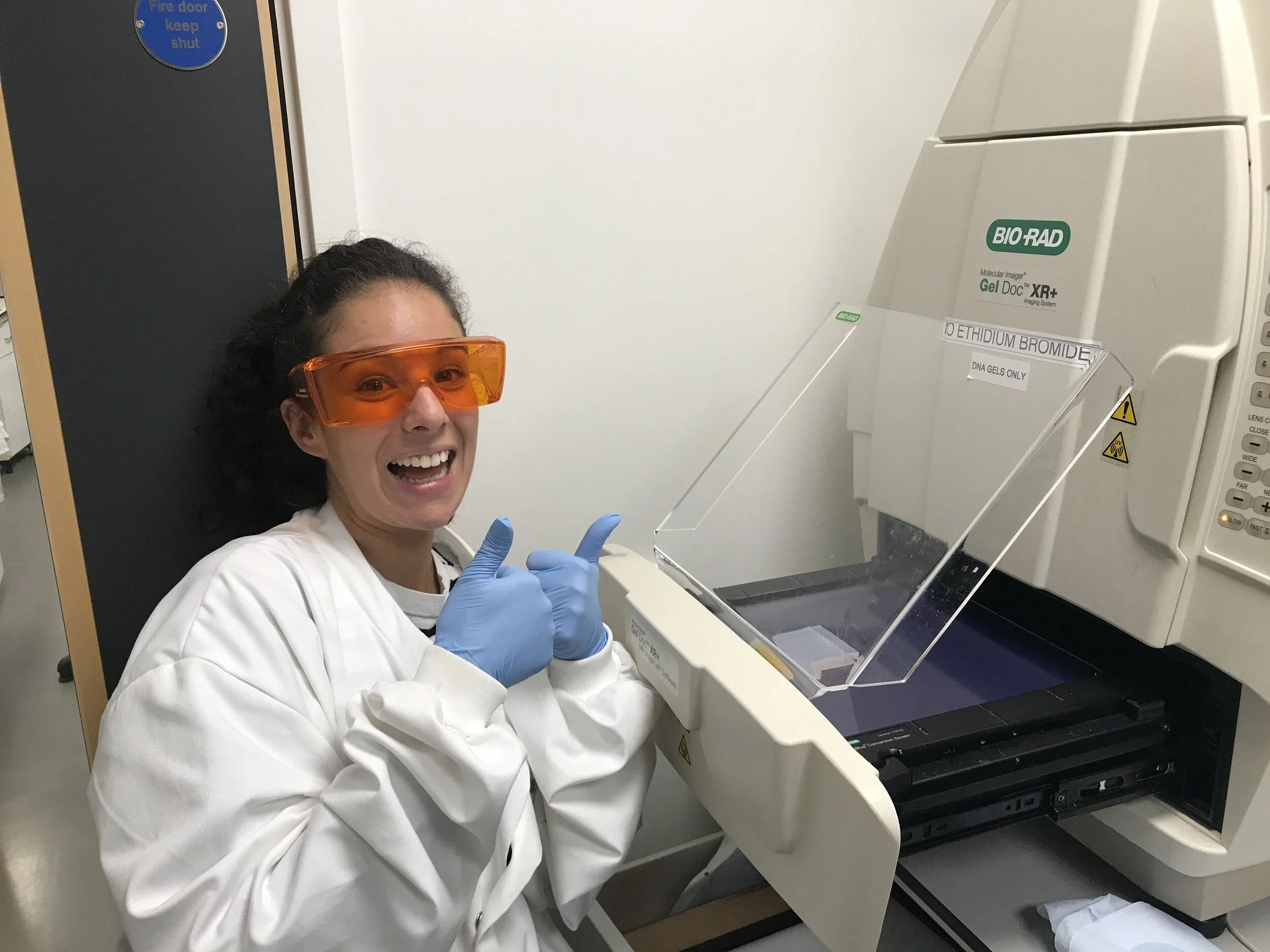
Federica Riccio gives 2 thumbs up after successful cloning to build integration plasmids that will be used to generate inducible neuronal lines.

Inchul Cho
I completed my undergraduate degree in Developmental Biology at the University of Manchester, where I developed an interest in the role of physical cues in regulating cell fate. I then spent a year working as a publishing assistant at the Nature Publishing Group. Finally, I studied for an MPhil in Biological Sciences at the University of Cambridge, during which I further pursued my interest in the cellular interactions that occur in response to injury using a mouse model that allows for lineage tracing of a specific pulmonary mesenchymal cell type.
Academic and Work Experience Prior to Sept 2018 Programme Start
I completed my undergraduate degree in Developmental Biology at the University of Manchester, where I developed an interest in the role of physical cues in regulating cell fate. I then spent a year working as a publishing assistant at the Nature Publishing Group.
Finally, I studied for an MPhil in Biological Sciences at the University of Cambridge, during which I further pursued my interest in the cellular interactions that occur in response to injury using a mouse model that allows for lineage tracing of a specific pulmonary mesenchymal cell type.
PhD Programme- Year 1- MRes and Project Rotations
During the first year of the programme, I had the opportunity to explore the diverse research areas that had always fascinated me.
I had explored the role of tissue-resident immune cells, specifically, regulatory T cells (Tregs), in maintaining homeostasis of non-lymphoid organs, such as the skin in the lab of Dr Niwa Ali.
I worked with Dr Alessandra Vigilante and Dr Alexis Lomakin, where I had the opportunity to learn how to perform computational analysis of large datasets using programming languages such as R. The datasets used for this purpose were previously generated as a part of the human induced pluripotent stem cell initiative (HipSci), and allowed me to identify candidate genes that may regulate nuclear morphology in response to changes in fibronectin concentration.
I worked with Dr Javier Barallobre-Barreiro and Prof Manuel Mayr and proteomic data of mouse neonatal hearts with the aim of identifying extracellular matrix proteins that may be associated with the regenerative potential of the heart, which is restricted to the first week after birth. I had also generated plasmids encoding for matrix-remodelling enzymes, which may be used to study how remodelling of the heart may be associated with the loss of regenerative potential of the heart.
I am really grateful for the first year for several reasons. By undertaking studies in very different labs, my perspectives as a researcher has widened. Moreover, it gave me the opportunity to explore research that I was always interested in.
PhD Programme- Years 2 to 4- Doctoral Studies
For my thesis project I have chosen to work with Dr Alessandra Vigilante and Dr Niwa Ali at the Centre for Stem Cells and Regenerative Medicine. My project has the ultimate aim of understanding how tissue-resident immune cells affect tissue homeostasis and disease onset. Given the explosion of immune cell therapies, a full understanding of their diverse identities and functions is more necessary than ever.
My project will thus utilise various techniques, such as single-cell RNA sequencing to probe the molecular and cellular heterogeneity of Tregs in multiple organs. Additionally, we will develop panels of tissue microarray for multiplexed immunofluorescence to characterize the phenotype of individual cells in greater depth. Finally, we will explore how Tregs that are anatomically distinct (for instance, hair follicle-associated and non-associated) differ functionally by using laser capture microdissection to isolate single cells of interest for further downstream analyses such as RNA sequencing.
Together, these approaches will elucidate the spatial and functional heterogeneity of Tregs, which will be pursued further using sophisticated mouse genetics.