

Abigail Isaacson
I completed my Master’s degree in regenerative medicine at UCL and afterwards gained experience in corneal tissue engineering using 3D bioprinting at Newcastle University. Following this, I worked as a research assistant at the Sanger Institute where I helped to establish a pipeline for genetic knockout studies on induced pluripotent stem cell (iPSC)-derived hepatocytes.

Academic work and experience prior to September 2019
I completed my Master’s degree in regenerative medicine at UCL and afterwards gained experience in corneal tissue engineering using 3D bioprinting at Newcastle University.
Following this, I worked as a research assistant at the Sanger Institute where I helped to establish a pipeline for genetic knockout studies on induced pluripotent stem cell (iPSC)-derived hepatocytes.
PhD Programme- Year 1- MRes and Project Rotations
This particular PhD programme interested me because of the broad interdisciplinary research carried out at King's and the training in both computational and experimental methods for this purpose.
During my MRes year I completed 3 different rotation projects that were wide-ranging and encompassed research into in situ tissue regeneration, muscular dystrophy, and the discovery of a novel mutation implicated in monogenic diabetes. I undertook my first rotation project in Professor Abigail Tucker's lab where I monitored the movement of potential stem cell populations during eardrum repair, both in vivo and in eardrum explants.
During my second rotation project in Professor Peter Zammit’s lab, I focused on the computational prediction of regulators of DUX4, a gene that is derepressed in Facioscapulohumeral muscular dystrophy (FSHD), from single-cell trajectory data.
I completed my final rotation project during the UK COVID-19 lockdown in Dr Francesca Spagnoli’s lab where I carried out gene ontology term enrichment analysis on differently expressed genes during different stages of in vitro pancreatic beta cell differentiation of a mutant iPSC line. The mutation introduced into this cell line had previously been identified as a disease-causing candidate in a cohort of patients with early-onset diabetes. The skills I gained during this year were enhanced by the many different workshops provided by King’s that enabled me to take a comprehensive approach when tackling different scientific questions.
PhD Programme- Years 2 to 4- Doctoral Studies
For my PhD project I have joined Dr Spagnoli’s lab in the Centre for Stem Cells and Regenerative Medicine. I am interested in understanding the molecular mechanisms underlying development and the maintenance of cell identity with a view to harnessing these for the generation of cell therapies. My PhD project is aimed at understanding the function of Pbx1, a homeodomain transcription factor, in both the developing and adult pancreas.
Pbx1 activity is essential for early pancreatic development as embryos with homozygous deficiency of Pbx1 exhibit pancreatic hypoplasia and cell differentiation defects prior to death in utero at E15.5. Using a conditional Cre-Lox system, we will focus on Pbx1 deletion in pancreatic epithelium at various stages of mouse development and in the adult pancreas. I will establish an iPSC model to assess whether developmental mechanisms involving Pbx1 observed in mice are also conserved in humans. I will also construct a gene regulatory network of the pancreatic epithelium using Chromatin Immunoprecipitation (ChIP) and RNA sequencing data at various developmental stages to test Pbx1 targets. This project has great potential for advancing the field of diabetes research and for the in vitro recapitulation of pancreatic development for cell therapies.

Elena Drudi
I completed my undergraduate degree in Biomedical Engineering at Imperial College London. During my time there I became interested in how mechanical forces affect tissues in the body. In my third-year project I looked at the effect of mechanical forces on wound repair. For my master’s project I studied the effects of mechanical forces on endothelial cells and how this relates to the activation of the Wnt signalling pathway.

Academic and Work Experience Prior to Sept 2019 Programme Start
I completed my undergraduate degree in Biomedical Engineering at Imperial College London. During my time there I became interested in how mechanical forces affect tissues in the body.
In my third-year project I looked at the effect of mechanical forces on wound repair. For my master’s project I studied the effects of mechanical forces on endothelial cells and how this relates to the activation of the Wnt signalling pathway.
PhD Programme- Year 1- MRes and Project Rotations
During my first year in the Wellcome Trust ‘Cell Therapies and Regenerative Medicine’ PhD Programme I have had the opportunity to learn many new skills:
In my first rotation with Dr Eileen Gentleman I used a novel hydrogel system to study the effect of different microenvironment stiffnesses on leukaemia cells.
In my second rotation, under the supervision of Dr Tanya Shaw, I studied the extracellular matrix composition of cancer associated fibroblasts and healthy fibroblasts. The aim was to understand if there is a link between immune response and fibrotic formation.
In my final rotation with Professor Steven Sacks and Dr Giorgia Fanelli during the UK COVID-19 lockdown, I learned how to write a review article. The review article focused on the current progress in complement inhibition-based therapy for the management of age-related macular degeneration.
PhD Programme – Years 2 to 4 – Doctoral Studies
To date, a complete mediation of scarring has not been achieved, but it is known that extracellular matrix (ECM), part of the connective tissue of the skin, is one of the main components that is changed during wound healing. Therefore, mediating the ECM might be key in reducing scarring. In the skin many different types of scars can occur, however there are some which are pathological and reduce the quality of life of patients, such as in keloid disease and recessive dystrophic epidermolysis bullosa (RDEB). Recent studies have shown that the ECM in keloids has unique characteristics compared with that from normal scars and skin. These could be similar in RDEB due to their similar fibrotic condition.
In my project I will start with transcriptional profiling to identify distinct qualities between normal skin and fibrotic skin diseases (keloids and RDEB). I will use the acquired information to run a compound screen to see if ECM can be restored to a healthy state. If successful targets have been shown to change the ECM, I will further study the specific pathways they activated. All the previous steps are using a specific technique where cells deposit their own ECM, known as cell derived matrix (CDM). The last step will compare the discovered in-vitro information to ex-vivo and in-vivo models. This will give a more conclusive picture on whether the skin is healing with a reduced amount of scarring.

Elise Engquist
I completed my bachelor’s degree in biology at Bowdoin College in Maine, USA, and after graduating I worked as a Research Assistant in the Melton Lab at the Harvard Stem Cell Institute in Massachusetts, USA. While working there, I studied part-time to receive a Master of Liberal Arts degree in Biotechnology Management from the Harvard Extension School.

Academic and Work Experience Prior to Sept 2019 Programme Start
I completed my bachelor’s degree in biology at Bowdoin College in Maine, USA, and after graduating I worked as a Research Assistant in the Melton Lab at the Harvard Stem Cell Institute in Massachusetts, USA.
While working there, I studied part-time to receive a Master of Liberal Arts degree in Biotechnology Management from the Harvard Extension School.
PhD Programme – Year 1 – MRes and Project Rotations
During my first year, I explored many diverse areas of stem cell biology. For my first rotation I joined the lab of Prof. Peter Zammit, where I used muscle stem cells from patients with facioscapulohumeral muscular dystrophy (FSHD) to investigate how oxidative stress and metabolic dysfunction contribute to the muscle-wasting observed in disease pathology.
My second rotation was with Prof. Paul Sharpe’s group, where I explored how loss of mechanosensing affects mesenchymal stem cells in the dental pulp of the adult mouse incisor. My third rotation, which I completed with Dr. Franziska Denk and Prof. Leonie Taams during the UK COVID-19 lockdown, was an interdisciplinary project examining the role of neuro-immune interactions in chronic pain in patients with rheumatoid arthritis.
PhD Programme – Years 2 to 4 – Doctoral Studies
For my thesis project I have joined the lab of Professor Peter Zammit. The Zammit group studies skeletal muscle with a particular emphasis on facioscapulohumeral muscular dystrophy (FSHD), an autosomal dominant muscular dystrophy involving progressive skeletal muscle weakness and wasting. Muscle normally repairs efficiently due to resident stem cells, but loss of muscle mass in FSHD indicates a compromised repair mechanism.
Over the course of my PhD, I aim to characterize muscle stem cells in FSHD by examining protein and gene expression in muscle biopsies from FSHD patients. I also aim to explore the dynamics of how FSHD affects development and function of muscle stem cells, as well as subsequent myofiber formation and regeneration, using induced pluripotent stem cells from FSHD patients and in vivo models.
This work will inform whether deficits in muscle stem cell function contribute to the muscle wasting observed in FSHD pathology, and explore potential regenerative therapies.

Eva Hamrud
I completed a bachelor’s degree in Natural Sciences at University of Cambridge and a master’s degree in biotechnology at Imperial College London. I then worked for two years at AstraZeneca in Gothenburg, Sweden.

Academic and Work Experience Prior to Sept 2019 Programme Start
I completed a bachelor’s degree in Natural Sciences at University of Cambridge and a master’s degree in biotechnology at Imperial College London. I then worked for two years at AstraZeneca in Gothenburg, Sweden.
PhD Programme – Year 1 – MRes and Project Rotations
My first rotation was a joint project between Davide Danovi and Eileen Gentleman. I used live imaging and particle tracking to develop a workflow for microrheology measurements. Microrheology is a method that detects local changes in material stiffness. The workflow was used to measure the ability of immune cells to remodel their hydrogel environment in an organoid model system for inflammatory bowel disease.
I carried out my second rotation with Andrea Streit investigating neural tube patterning in the developing chick embryo. I worked both experimentally collecting embryos for single cell sequencing experiments, and computationally analysing the results of previous datasets to identify transcription factors that could be important for neural tube patterning.
In my final rotation, I worked remotely during the UK COVID-19 lockdown with Cynthia Andoniadou to characterise the WNT signalling landscape in the different cells of the anterior pituitary. I analysed single cell sequencing datasets from three different timepoints to identify the different cell types and searched for differences in WNT-related gene expression between cell types.
PhD Programme – Years 2 to 4 – Doctoral Studies
My PhD project aims to identify the gene regulatory network underlying cell fate choices during placode development. My supervisors are Andrea Streit and Nick Luscombe. Placodes are thickenings of ectoderm in the vertebrate embryo which give rise to the essential sensory system of the head. Although a lot of research has focused on signalling, cell movements and timings of placode development, a mechanistic understanding of how placodal progenitors differentiate into cranial placodes is still missing.
The aim of this project is to reconstruct the molecular circuitry, the gene regulatory network, that drives cell fate decisions in developing placodes. This will make use of single cell gene expression and ATAC-seq data and subsequent perturbation analysis in the chick. Increasing our understanding of placode development will enable us to understand the mechanism behind a range of congenital diseases which can cause hearing loss and craniofacial malformations. More broadly, this study hopes to reveal general principles of cell fate decisions and expand our range of tools to study them in other contexts.
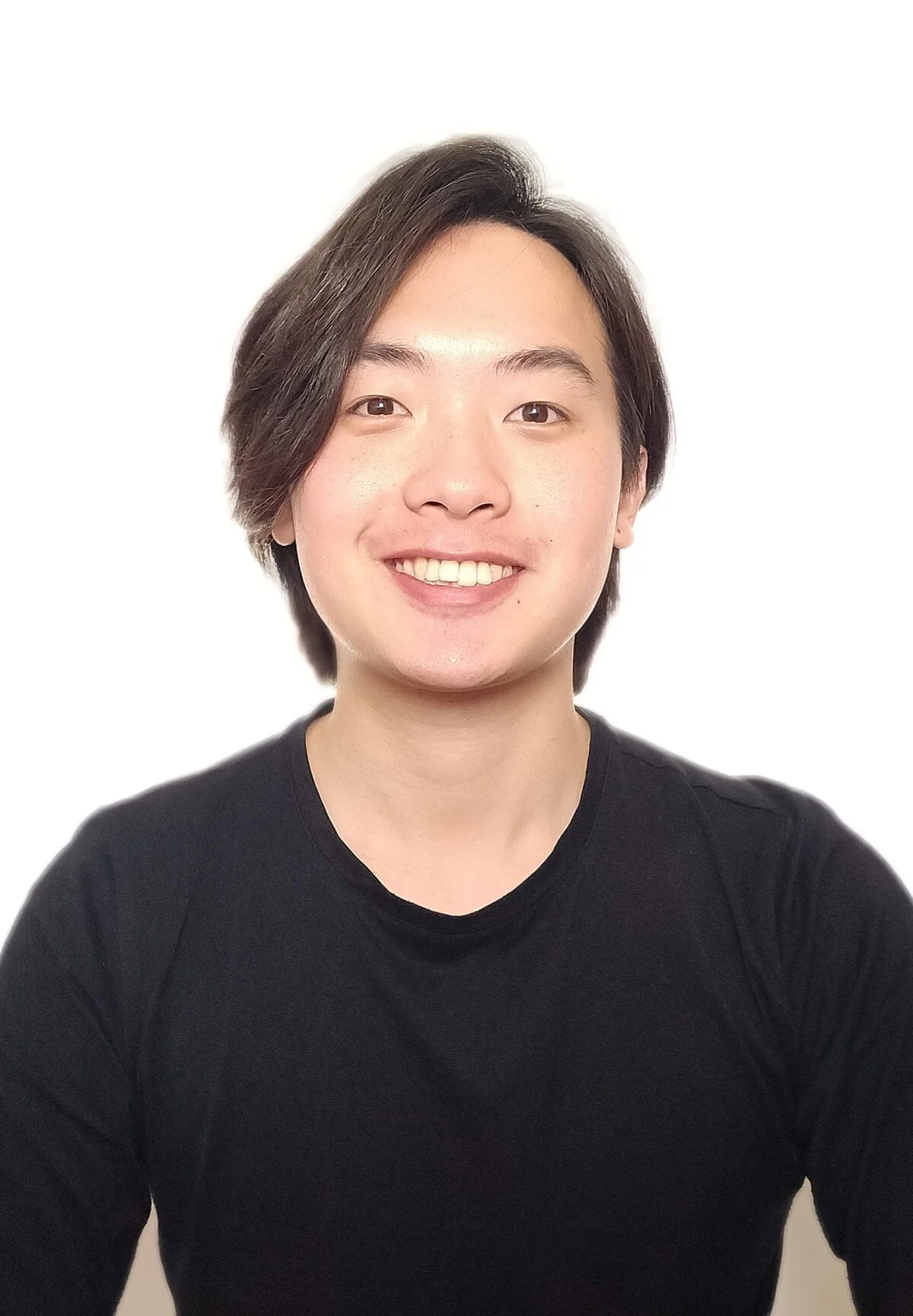
Matthew Wai Heng Chung
I obtained my bachelor’s degree in Biomedical Sciences and MPhil in Structural Biology at the University of Hong Kong. I completed an MSc in Health Data Science at University College London.

Academic and Work Experience Prior to Sept 2019 Programme Start
I obtained my bachelor’s degree in Biomedical Sciences and MPhil in Structural Biology at the University of Hong Kong. I completed an MSc in Health Data Science at University College London.
PhD Programme – Year 1 – MRes and Project Rotations
During the first year of the programme I completed three rotations all related to the digestive system:
Intestinal organoids response to type 3 innate lymphoid cell cytokines – Dr Joana Neves and Dr Rocio Martinez-Nunez.
Pancreas development and the contribution of epithelial-mesenchymal interaction informed by single-cell RNA sequencing – Dr Francesca Spagnoli and Dr Alessandra Vigilante.
Liver regeneration pathway discovery using network bioinformatics to integrate single-cell transcriptome and interactome databases – Dr Tamir Rashid, Prof Francesco Dazzi, with generous help from Prof Franca Fraternali during the UK COVID-19 lockdown.
PhD Programme – Years 2 to 4 – Doctoral Studies
I will be working with Dr Subhankar Mukhopadhyay and Prof Alberto Sanchez-Fueyo to study macrophages. Macrophage is a key cell type in the innate immune system that is ubiquitously distributed in almost every tissue and organ of the body and carries out a variety of homeostatic and immune functions. A balance between macrophage activation, regulation and its reparative function is critical to restoring tissue homeostasis without compromising host defence.
Excessive macrophage activation contributes to many inflammatory diseases including inflammatory bowel disease (IBD) and non-alcoholic fatty liver disease (NAFLD). Thus, resetting the optimal balance of macrophage activation is an attractive therapeutic strategy to prevent or treat organ-specific inflammatory diseases. During my PhD, I will use human iPSC-derived macrophages to investigate how they become activated after tissue damage, particularly through scavenger receptors in collaboration with other pattern recognition receptors.
I will also study how the IL-10/PGE2 axis and regulatory T cells limit macrophage activation, which will be validated in a mouse liver injury model. A full understanding of these mechanisms will guide the development of potential therapeutic targets that harness specific macrophage properties for clinical benefit.

Nathalia Almeida dos Santos
For my bachelor’s degree, I completed the course of Biomedical Sciences at the Federal University of São Paulo. In the third year of this course, I was awarded a scholarship from the Brazilian government to complete an exchange year at the University of Sheffield. When returning, I completed my bachelor thesis with Prof Patricia Beltrão Braga, in which I developed a 3D model of the developing brain using iPSC-derived neural progenitor cells. To carry on with my interest in neuroscience, I was thrilled to receive the Goethe Goes Global scholarship to complete a master’s degree in Interdisciplinary Neuroscience at the Goethe University of Frankfurt. My master thesis with Dr Julia Ladewig involved optimising protocols to derive forebrain organoids from iPSCs.

Academic and Work Experience Prior to Sept 2019 Programme Start
For my bachelor’s degree, I completed the course of Biomedical Sciences at the Federal University of São Paulo. In the third year of this course, I was awarded a scholarship from the Brazilian government to complete an exchange year at the University of Sheffield.
When returning, I completed my bachelor thesis with Prof Patricia Beltrão Braga, in which I developed a 3D model of the developing brain using iPSC-derived neural progenitor cells. To carry on with my interest in neuroscience, I was thrilled to receive the Goethe Goes Global scholarship to complete a master’s degree in Interdisciplinary Neuroscience at the Goethe University of Frankfurt.
My master thesis with Dr Julia Ladewig involved optimising protocols to derive forebrain organoids from iPSCs.
PhD Programme – Year 1 – MRes and Project Rotations
For my rotations, I wanted to branch out from neuroscience and learn more about stem cells in different contexts.
In Dr Rocio Sancho’s lab I experimented with the culture conditions of pancreas organoids protocols, and validate interactors playing a role during endocrine differentiation;
I joined Prof Michael Malim to define how the HIV-1 life cycle changes in iPSC lines coming from different donors showing extreme infection phenotypes, and to establish a protocol to generate iPSC-derived macrophages.
Finally for the third rotation, I joined Dr Joana Neves. We had initially planned to establish a protocol to obtain innervated human intestinal organoids to tackle whether Parkinson’s disease can be initiated in the gut. However, due to Covid-19 UK lockdown, we instead wrote a grant to obtain funding for this project, which was submitted to the Royal Society research grant scheme, and analysed previous data from the lab using Ingenuity Pathway Analysis (IPA) to understand α-Synuclein overexpression in mouse small intestinal organoids co-cultured with innate lymphoid cells.
PhD Programme – Years 2 to 4 – Doctoral Studies
For my PhD project, I have chosen to join the Malim lab. I was drawn to this project because the influence of host genetic factors upon HIV-1 infection is still not fully elucidated. Since the virus relies on the host cell machinery and proteins to replicate, host genetics are a key determinant not only of the proteins expressed but also of their functional capabilities – which will thus dictate the outcome of virus infection.
My research will then link the natural occurring genetic variation found in the human population with the inherent variability in the capacity of cells from different individuals to support HIV-1 growth. I will work with well characterised iPSCs from the HipSci bank to obtain macrophages, which are natural targets of HIV-1 infection. I will then characterise how the virus infects and replicates in macrophages, and employ a bespoke bioinformatics pipeline to compare the genome sequences and transcriptomes of cells showing extreme infection phenotypes.
With this approach, I hope to identify novel host factors that can regulate viral replication and that my results will add new insights into the understanding of HIV-1 infection and disease (AIDS) and suggest avenues to be explored as potential novel therapeutic strategies to treat and control HIV-1.

Victoria Tsang
I completed my Bachelor’s degree in Biomedical Sciences at Queen Mary, University of London. Whilst there, I did my final year dissertation at William Harvey Research Institute on exploring the process of ubiquitination on the NF-κB activation downstream of TLR7 signalling. I joined an MRes in Cancer Biology at Imperial College London to acquire more diverse laboratory skills. For my first master rotation at the Francis Crick Institute, I had the opportunity to work with CyTOF and imaging mass cytometry to investigate the immune profile of Kras driven lung tumours from mice. Along with the design of an antibody panel and the optimisation of the protocol, I learned the use of current softwares and developed image analysis pipelines.

Academic and Work Experience Prior to Oct 2019
I completed my Bachelor’s degree in Biomedical Sciences at Queen Mary, University of London. Whilst there, I did my final year dissertation at William Harvey Research Institute on exploring the process of ubiquitination on the NF-κB activation downstream of TLR7 signalling.
I joined an MRes in Cancer Biology at Imperial College London to acquire more diverse laboratory skills. For my first master rotation at the Francis Crick Institute, I had the opportunity to work with CyTOF and imaging mass cytometry to investigate the immune profile of Kras driven lung tumours from mice. Along with the design of an antibody panel and the optimisation of the protocol, I learned the use of current softwares and developed image analysis pipelines.
I further expanded my interest in the immune infiltrate at a molecular level where I studied how Ras signalling modulates inflammation and efferocytosis in macrophages. At Barts Cancer Institute, my dissertation involved the co-culture of apoptotic cancer cells with bone marrow-derived macrophages from an inducible mouse model in which the RAS-PI3K interaction can be disrupted.
Following my degree, I explored the effects of acute or chronic UV irradiation on immune cell populations in mice models as a research assistant with Dr Emanuel Rognoni in the Centre for Stem Cells and Regenerative Medicine. I also established decellularised dermis organotypics in culture from adult and neonatal mouse skin to study fibroblasts ex vivo in 3D under homeostatic conditions.
PhD Programme – Years 2 to 4 – Doctoral Studies
My PhD project will investigate Glioblastoma cells migration with supervisors, Dr Davide Danovi and Dr Ciro Chiappini. Glioblastoma Multiforme (GBM) is the most common and most aggressive brain tumour in adults. Despite current advances, survival remains over a year from diagnosis and treatment-resistant residual GBM subpopulations infiltrate axon bundles inevitably causing recurrence. Research is critically needed to develop innovative therapies targeting these infiltrating cells. This project will explore the signalling cues and pathways that are essential for GBM cells migration and infiltration on nerve bundles.
We aim to:
develop a robust workflow to characterise and quantify the migration of a panel of GBM cells using high content imaging pipelines;
define variation in the migration properties in populations and subpopulations of several patient-derived GBM cultures;
decorate artificial substrates with the identified relevant signals to obtain a comparable GBM cells migration to that on a nerve and compare migration of cells on those migratory substrates. Stem cell-derived axon bundles will be used as migratory substrates and in parallel, polycaprolactone electrospun nanofibers with defined physical properties will be bio-functionalised with peptide and protein signals.
The main deliverable of this project is to define the relevant signals which guide the migration of GBM cells. The translational output is an assessment of the robustness of this platform as a screening bed for chemical compounds specifically acting on the migration of glioblastoma cells. Moreover, the definition of a ‘fake-nerve’ substrate approach could potentially also offer innovative precision-medicine approaches towards new therapies and medical devices.