

Peter Harley
I completed my undergraduate degree in developmental biology (MSci) at the University of Manchester, where I worked with Professor Sue Kimber to develop iPSC models of rare skeletal disorders. During this time, I also undertook a BBSRC funded studentship to investigate wound healing in diabetes.

Academic and Work Experience Prior to Sept 2016 Programme Start
I completed my undergraduate degree in developmental biology (MSci) at the University of Manchester, where I worked with Professor Sue Kimber to develop iPSC models of rare skeletal disorders. During this time, I also undertook a BBSRC funded studentship to investigate wound healing in diabetes.
PhD Programme – Year 1 – MRes and Project Rotations
During my first rotation project I worked with Dr Davide Danovi and Professor Fiona Watt as part of the human induced pluripotent stem cell initiative (HipSci). During this project I grew kidney organoids from patient iPSCs to model Bardet-Biedl syndrome.
In my second rotation project I worked with Dr Ivo Lieberam to develop in vitro neuromuscular circuits in order to model the loss of nerve-muscle connectivity in ALS.
In my final project I worked with Dr Franziska Denk and Professor Stephen McMahon to understand how neuro-immune interactions contribute to sex-specific differences in chronic pain.

Impulse
by Peter Harley
Explanation: A motor neuron in blue (Tubb3) made artificially in the lab from stem cells taken from patients with motor neuron disease. The orange sections (Ankyrin-G) are the main sites where nerve impulses are generated.
PhD Programme – Years 2 to 4 – Doctoral Studies
Amyotrophic lateral sclerosis (ALS) is a rapidly fatal neurodegenerative disorder, characterised by progressive loss of motor neurons (MNs) in the brain and spinal cord. Surmounting evidence suggests that peripheral axonal and neuromuscular junction (NMJ) defects precede overall cell death in the disease pathogenesis. However, the molecular mechanisms underpinning these critical early events remain poorly understood.
A major reason for this is the difficulty in accessing live neuromuscular junctions for study. To overcome this, we intend to engineer functional human neuromuscular junctions in vitro. Motor neurons derived from wildtype human induced pluripotent stem cells (hiPSCs) and hiPSCs harbouring an ALS-linked TDPeter HarP-43 mutation will be plated, along with astrocytes, into a microfluidics device. Axons will be able to project through micro-channels into a separate muscle compartment, where they will be able to form neuromuscular connections. Optogenetics will be used to stimulate motor neuron activity and trigger myofiber contraction, mimicking the voluntary movement that is lost in ALS.
Using this platform, we will be able to apply various live imaging techniques to the study of human neuromuscular junction pathology that has not previously been possible. As such we feel this approach will provide unique insights into how TDP-43 mediates some of the earliest pathological events in ALS. Ultimately, through a collaboration with AstraZeneca, we intend to use this platform for drugs discovery.

A Song of Fire and Ice
by Peter Harley
Explanation: We directed stem cells to become motor neurons (blue=Tubb3) and astrocytes (orange=GFAP). Normally astrocytes provide a comfortable environment for the neurons to live, but in a number of diseases, such as motor neuron disease, they can create a toxic environment that kills the neurons.
Congratulations to Peter Harley for receiving the:
Susan Tucker Award for the most outstanding student in the Biomedical and Translational Sciences MRes programme. October 2018.
Centre for Stem Cells and Regenerative Medicine Award for the student scoring the highest Biomedical and Translational Science MRes degree mark and continuing to a PhD in Stem Cells and Regenerative Medicine. November 2018.

Teodora Manea
I completed my undergraduate studies at the University of York, graduating with a BSc Biochemistry degree. During my bachelor's degree, I gained research experience by participating in the iGEM (International Genetically Engineered Machine) competition as a member of the team representing my university. I spent the third year of my four-year degree on an industrial placement at the Earlham Institute, improving my knowledge of bioinformatics and learning more about gene expression analysis and tissue culture.

Academic and Work Experience Prior to Sept 2016 Programme Start
I completed my undergraduate studies at the University of York, graduating with a BSc Biochemistry degree. During my bachelor's degree, I gained research experience by participating in the iGEM (International Genetically Engineered Machine) competition as a member of the team representing my university. I spent the third year of my four-year degree on an industrial placement at the Earlham Institute, improving my knowledge of bioinformatics and learning more about gene expression analysis and tissue culture.
PhD Programme – Year 1 – MRes and Project Rotations
In my first year of the Wellcome Trust ‘Cell Therapies and Regenerative Medicine’ Four-Year PhD Programme, I explored diverse aspects of the field of stem cells and regenerative medicine through my three rotation projects.
I undertook my first rotation under the supervision of Professor Graham Lord and Dr Joana Neves, investigating plasticity triggers between different types of innate lymphoid cells within a 3D intestinal organoid co-culture system.
During my second rotation, in Dr Eileen Gentleman’s group, I worked to characterise the effects of PEG hydrogels with different mechanical properties on iPSC differentiation towards the three germ layers, focusing in particular on the role of hydrogel stiffness, adhesiveness and degradability.
Throughout my third rotation, carried out in Dr Rocio Sancho’s lab, I aimed to elucidate the role of Fbw7, an E3 Ubiquitin Ligase, in the proteasomal degradation of proendocrine transcription factors Pdx1 and MafA.
As these transcription factors, alongside Ngn3, are essential in β-cell development, it is hoped that by identifying ubiquitin ligases involved in their degradation and impairing their function, we can enhance β-cell generation.
PhD Programme – Years 2 to 4 – Doctoral Studies
In Type 1 Diabetes, insulin-producing β-cells in the pancreas are destroyed due to an autoimmune reaction, resulting in impaired insulin production and dysregulated glucose metabolism. Transplantation of pancreatic islets from healthy donors has been attempted, aiming to compensate for lost β-cells in diabetic patients, but a shortage of islets available for transplantation and the fact that the transplant must be accompanied by immunosuppression currently limits the clinical applications of this therapy.
To circumvent these issues and boost β-cell generation, attempts have been made to identify triggers that could induce the ex vivo transition from the abundant exocrine pancreatic cells to β-cells. While inducing overexpression of β-cell development factors Pdx1, Ngn3 and MafA in exocrine cells through adenoviral infection was found to transdifferentiate them into β-like cells, this strategy does not result in fully functional β-cells, partly due to the incorrect regulation of the three transcription factors.
My project, carried out within Dr Rocio Sancho’s lab, will investigate ways to stabilise Pdx1, Ngn3 and MafA levels post-translationally, focusing on the role of ubiquitin ligases Fbw7 and Huwe1. As preliminary data from the lab suggests that these ubiquitin ligases play a role in the degradation of at least some of the transcription factors of interest, we hypothesise that impairing their function could lead to stabilisation of Pdx1, Ngn3 and MafA, thus enhancing β-cell generation.

Federica Riccio
I completed my undergraduate and master’s degree in Pharmaceutical Biotechnology at the University of Milan (Italy). During my BSc I examined the molecular mechanisms of stress in the development of depression (University of Milan). During my MSc my work focused on the crystallisation of a Dengue virus protein for drug discovery purposes (internship at University College London). After graduating, I enrolled in the ORISE post-bac fellowship program at the National Institutes of Health (USA) where I worked on a basic cell biology project, looking at the interplay between structure and function of the endoplasmic reticulum.

Academic and Work Experience Prior to Sept 2018 Programme Start
I completed my undergraduate and master’s degree in Pharmaceutical Biotechnology at the University of Milan (Italy). During my BSc I examined the molecular mechanisms of stress in the development of depression (University of Milan).
During my MSc my work focused on the crystallisation of a Dengue virus protein for drug discovery purposes (internship at University College London). After graduating, I enrolled in the ORISE post-bac fellowship program at the National Institutes of Health (USA) where I worked on a basic cell biology project, looking at the interplay between structure and function of the endoplasmic reticulum.
PhD Programme – Year 1 – MRes and Project Rotations
During my first rotation project I worked with Dr Eileen Gentleman and Dr Tamir Rashid investigating the effect of co-culture, substrate mechanical properties and spatial dimensionality on human iPSC-derived hepatocytes maturation. Specifically, we combined classic chemical differentiation, with co-culture alongside HUVECs in a 3D PEG-based hydrogel system with defined biomechanical properties and stiffness similar to that of hepatic tissue.
In my second rotation project I worked under the supervision of Dr Francesca Spagnoli to resolve pancreatic progenitor heterogeneity using single molecule RNA in situ hybridisation techniques as follow up approaches to spatially correlate single cell RNA-seq data.
In my final rotation project, I worked with Dr Ivo Lieberam and Dr Juan Burrone towards the development of a human iPSC-based in vitro disease model of epilepsy. The model comprises the co-culture of excitatory cortical neurons and inhibitory interneurons expressing two spectrally distinct optogenetic probes that allow for independent electrophysiological manipulation of the neuronal populations in co-culture.
PhD Programme – Years 2 to 4 – Doctoral Studies
For my PhD project I have joined Dr Ivo Lieberam’s and Dr Juan Burrone’s lab. The project will focus on Dravet syndrome, a rare form of infantile epilepsy primarily caused by loss-of-function mutations in the gene SCN1A encoding the voltage-gated sodium channel NaV1.1.
The quality and duration of life of Dravet syndrome patients is severely compromised by the gravity of the epileptic symptoms and associated cognitive/behavioural disorders and, to date, standard treatments have very limited efficacy. With this project, we aim to generate a novel hiPSC-based disease model for Dravet syndrome suitable for testing chemical and gene/cell-based therapies. First, we aim to differentiate GABAergic inhibitory interneurons and excitatory cortical neurons from wildtype control and patient-derived hiPSC lines.
These neuronal populations will be functionalised with specific markers for their isolation and optogenetic probes for the manipulation of their activity. The functionalised neuronal populations will then be combined into a co-culture in order to generate in vitro human neural circuits that constitute the base of the disease model. Following the establishment of the co-culture, we aim to characterise the model and validate it using known chemical compounds adopted in the treatment of Dravet syndrome.
Ultimately, we aim to use this refined in vitro model as a drug screening platform for the identification of novel Dravet syndrome treatments and as a potential model for cell therapy-based applications aimed at restoring the excitation/inhibition balance in compromised neural circuits.
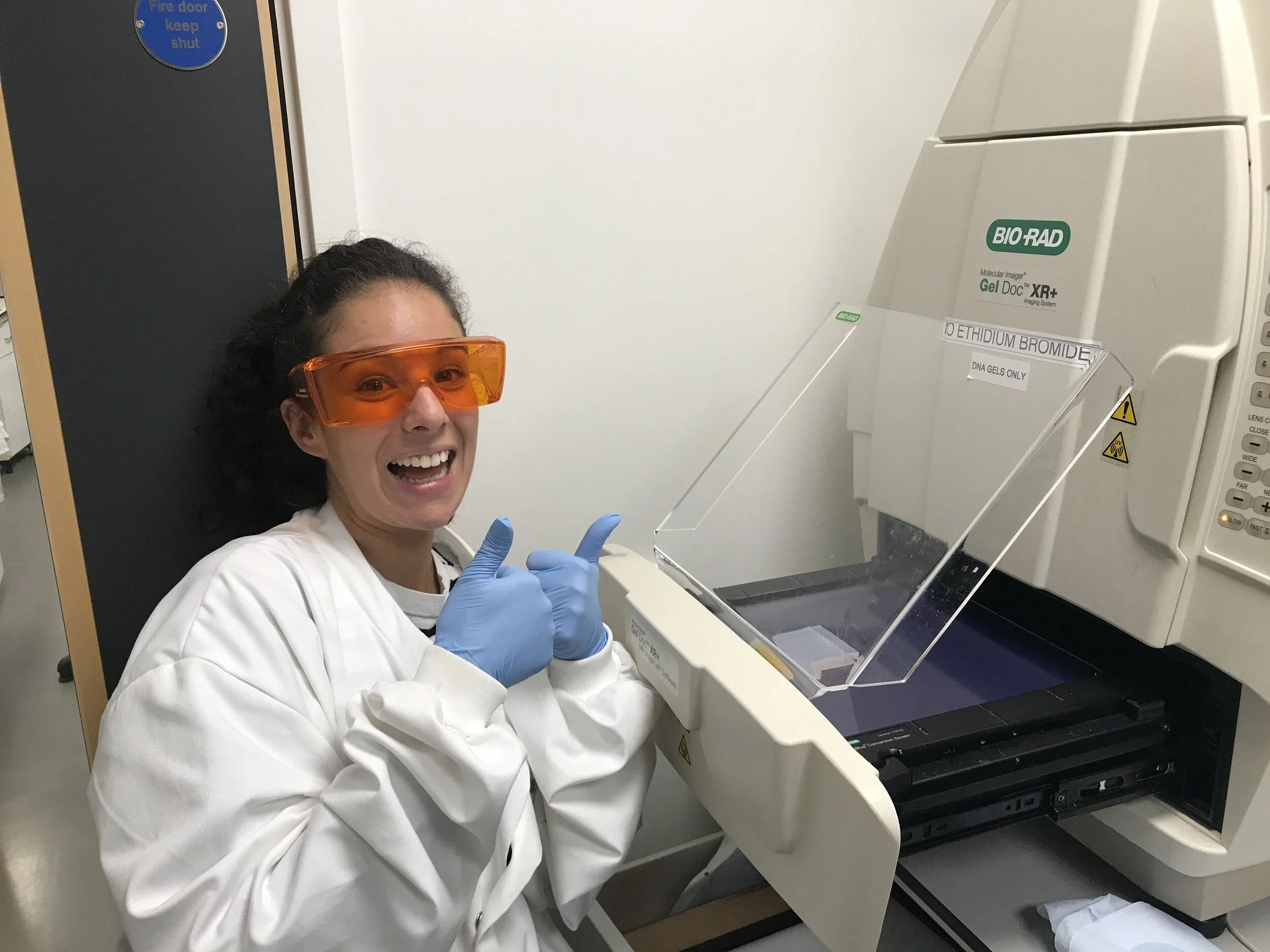
Federica Riccio gives 2 thumbs up after successful cloning to build integration plasmids that will be used to generate inducible neuronal lines.

Inchul Cho
I completed my undergraduate degree in Developmental Biology at the University of Manchester, where I developed an interest in the role of physical cues in regulating cell fate. I then spent a year working as a publishing assistant at the Nature Publishing Group. Finally, I studied for an MPhil in Biological Sciences at the University of Cambridge, during which I further pursued my interest in the cellular interactions that occur in response to injury using a mouse model that allows for lineage tracing of a specific pulmonary mesenchymal cell type.
Academic and Work Experience Prior to Sept 2018 Programme Start
I completed my undergraduate degree in Developmental Biology at the University of Manchester, where I developed an interest in the role of physical cues in regulating cell fate. I then spent a year working as a publishing assistant at the Nature Publishing Group.
Finally, I studied for an MPhil in Biological Sciences at the University of Cambridge, during which I further pursued my interest in the cellular interactions that occur in response to injury using a mouse model that allows for lineage tracing of a specific pulmonary mesenchymal cell type.
PhD Programme- Year 1- MRes and Project Rotations
During the first year of the programme, I had the opportunity to explore the diverse research areas that had always fascinated me.
I had explored the role of tissue-resident immune cells, specifically, regulatory T cells (Tregs), in maintaining homeostasis of non-lymphoid organs, such as the skin in the lab of Dr Niwa Ali.
I worked with Dr Alessandra Vigilante and Dr Alexis Lomakin, where I had the opportunity to learn how to perform computational analysis of large datasets using programming languages such as R. The datasets used for this purpose were previously generated as a part of the human induced pluripotent stem cell initiative (HipSci), and allowed me to identify candidate genes that may regulate nuclear morphology in response to changes in fibronectin concentration.
I worked with Dr Javier Barallobre-Barreiro and Prof Manuel Mayr and proteomic data of mouse neonatal hearts with the aim of identifying extracellular matrix proteins that may be associated with the regenerative potential of the heart, which is restricted to the first week after birth. I had also generated plasmids encoding for matrix-remodelling enzymes, which may be used to study how remodelling of the heart may be associated with the loss of regenerative potential of the heart.
I am really grateful for the first year for several reasons. By undertaking studies in very different labs, my perspectives as a researcher has widened. Moreover, it gave me the opportunity to explore research that I was always interested in.
PhD Programme- Years 2 to 4- Doctoral Studies
For my thesis project I have chosen to work with Dr Alessandra Vigilante and Dr Niwa Ali at the Centre for Stem Cells and Regenerative Medicine. My project has the ultimate aim of understanding how tissue-resident immune cells affect tissue homeostasis and disease onset. Given the explosion of immune cell therapies, a full understanding of their diverse identities and functions is more necessary than ever.
My project will thus utilise various techniques, such as single-cell RNA sequencing to probe the molecular and cellular heterogeneity of Tregs in multiple organs. Additionally, we will develop panels of tissue microarray for multiplexed immunofluorescence to characterize the phenotype of individual cells in greater depth. Finally, we will explore how Tregs that are anatomically distinct (for instance, hair follicle-associated and non-associated) differ functionally by using laser capture microdissection to isolate single cells of interest for further downstream analyses such as RNA sequencing.
Together, these approaches will elucidate the spatial and functional heterogeneity of Tregs, which will be pursued further using sophisticated mouse genetics.

Ana-Maria Cujba
I obtained a MSci in Biochemistry (with Immunology) from University of Aberdeen with a year in industry at GlaxoSmithKline, Stevenage, UK. As part of an Aberdeen university team, I participated in the international Genetically Engineered Machine Competition at MIT, USA, where scientists across the world present innovative projects to address worldwide problems through synthetic biology. Our project aimed to develop an E. coli-based system to detect infections with the Trypanosoma parasite for people living in underprivileged rural places in Africa.

Academic and Work Experience Prior to Sept 2016 Programme Start
I obtained a MSci in Biochemistry (with Immunology) from University of Aberdeen with a year in industry at GlaxoSmithKline, Stevenage, UK. As part of an Aberdeen university team, I participated in the international Genetically Engineered Machine Competition at MIT, USA, where scientists across the world present innovative projects to address worldwide problems through synthetic biology. Our project aimed to develop an E. coli-based system to detect infections with the Trypanosoma parasite for people living in underprivileged rural places in Africa.
PhD Programme – Year 1 – MRes and Project Rotations
During my first year here in the Wellcome Trust ‘Cell Therapies and Regenerative Medicine’ Four-Year PhD Programme, I tried different areas of research and learned new techniques to examine:
the role of extracellular matrix niche factors on culturing primary human foetal hepatocytes with Dr Tamir Rashid;
regulatory T cells in Systemic Lupus Erythematosus and whether specific biomarkers can be associated with disease severity with Dr Giovanna Lombardi and Dr Cristinao Scotta;
regulators of one of the main pancreatic transcription factors, with the aim to find novel ways to generate stable and functional pancreatic organoids with Dr Rocio Sancho.
Overall, I learnt how to work with very distinct cell lines, flow cytometry, functional assays, high-content imaging and new bioinformatic tools. The experience taught me that I want to combine bioinformatics with laboratory-based work during my PhD project.
PhD Programme – Years 2 to 4 – Doctoral Studies
My thesis work will focus on diabetes with supervisor Dr Rocio Sancho. Diabetes is characterised by the body's inability to regulate blood glucose. Pancreatic β-cells regulate glucose through insulin release. Monogenic Diabetes is a rare type of diabetes caused by gene mutations that make β-cells dysfunctional.
During my thesis work, I will be using induced Pluripotent Stem Cells (iPSCs) derived from patients with Monogenic Diabetes banked through the Human Induced Pluripotent Stem Cells Initiative (HipSci). The effect of the mutations will be investigated during pancreas development. The mechanism of action of the mutants will be investigated in vitro and in vivo. Through further understanding of the heterogeneity of Monogenic Diabetes phenotypes, this project aims to reveal more accurate detection targets and opportunities for personalised treatment.




Daria Belokhvostova
I completed my undergraduate studies in Life Sciences in the Netherlands, where I was lucky enough to work as an intern in both the Netherlands Cancer Institute in Amsterdam and Utrecht University Medical Centre. I obtained various experiences in cell and molecular biology and discovered my interest in stem cells while working in Utrecht on the stem cell marker Lgr5.

Academic and Work Experience Prior to Sept 2016 Programme Start
I completed my undergraduate studies in Life Sciences in the Netherlands, where I was lucky enough to work as an intern in both the Netherlands Cancer Institute in Amsterdam and Utrecht University Medical Centre. I obtained various experiences in cell and molecular biology and discovered my interest in stem cells while working in Utrecht on the stem cell marker Lgr5.
PhD Programme – Year 1 – MRes and Project Rotations
During my first year in the Wellcome Trust 'Cell Therapies and Regenerative Medicine' Four-Year PhD Programme, I worked on stem cells in three different organ systems:
pituitary gland with Dr Cynthia Andoniadou;
skin with Professor Fiona Watt; and
liver with Professor Anil Dhawan and Dr Celine Filippi.
I enjoyed gaining insight into how stem cells are regulated differently in a tissue dependent context.
PhD Programme – Years 2 to 4 – Doctoral Studies
The Human Cell Atlas is a comprehensive reference map of all cells in the body. I have now joined Professor Fiona Watt's lab and will be involved in their contribution to the Human Cell Atlas project: determining the different types of skin cells.
Thousands of diseases affect the skin, and skin problems are the most common reason to visit a doctor in the UK. Using skin discarded during surgery to isolate healthy and diseased human skin cells from the epidermis (skin’s outer layer), my thesis work will include investigating single-cell level heterogeneity and temporospatial regulation.
I will examine which genes are expressed on an individual cell level, and identify their location through microscopy work. Understanding the factors controlling normal skin renewal and how dysregulation of this process can lead to disease will provide further basis for developing new diagnosis and treatment options.

Public Engagement of Science at the Evelina Inspiring Youth Conference
Daria Belokhvostova gets into her stem cell embroidery at the Stitch’n Stem activity table as Ella Hubber demonstrates how transplantation of pancreatic islets in different organs in the body can act as a treatment for type 1 diabetes.

Geraldine Jowett
I completed a Bachelor’s degree in Human Developmental and Regenerative Biology with a focus on neuroscience at Harvard University (Cambridge, USA). I then spent two years working as a research assistant and a teaching fellow at the Harvard Stem Cell Institute.

Academic and Work Experience Prior to Sept 2016 Programme Start
I completed a Bachelor’s degree in Human Developmental and Regenerative Biology with a focus on neuroscience at Harvard University (Cambridge, USA). I then spent two years working as a research assistant and a teaching fellow at the Harvard Stem Cell Institute.
PhD Programme – Year 1 – MRes and Project Rotations
During my first year I completed three very different rotations that came together to inform my PhD project:
I studied the role of innate lymphoid cells in mouse intestinal organoid development with Dr Joana Neves and Dr Graham Lord;
I examined the role of Wnt3a in mediating asymmetric cell division in mouse embryonic stem cells with Dr Shukry Habib; and
I formed a collaboration between Dr Eileen Gentleman and Dr Ciro Ciappini, specialists in materials engineering, and Dr Davide Danovi, the director of cell phenotyping for HipSci, to optimise culture conditions and characterise mechanosensing properties of human induced pluripotent stem cells in 3D PEG-hydrogels.
During this rotation I also attempted to use nanoneedles to induce gastrulation in hiPSC-spheroids, with an aim to better understand how mechanotransduction might inform germ layer formation.
PhD Programme – Years 2 to 4 – Doctoral Studies
To have a ‘gut feeling’ is more than an idiom, as the intestine not only digests food and excretes waste, but helps the micro-organisms in our gut interact with the white immune cells in our blood. I am now working with Dr Eileen Gentleman and Dr Joana Neves to study the role of mechanosensing and innate lymphoid cell interactions in intestinal organoid development and integrity when cultured in 3D PEG-hydrogels. I will study how these three units interact in real life by creating a replica ‘intestinal immune-system in a dish’, which consists of 3D mini-guts called organoids that I will inject with disease-associated microbiome strains and surround with innate immune lymphoid cells, which protect us from infection and help keep the intestinal epithelium healthy. I am interested in improving the culture conditions necessary for the maintenance of this system, using novel hydrogels and tissue-engineering techniques to make it as similar to the human body as possible. I will then use this model to study why the composition of the microbiome has such a dramatic impact on human health and well-being, and more specifically I will also use it to understand what environmental and genetic causes act together to cause inflammatory bowel disease, using this platform to look for new drug targets for the treatment of this severe and incurable disease.
Congratulations to Geraldine Jowett for receiving the:
‘In vitro precision medicine’ award of £10,000 from the NIHR Biomedical Research Centre for her ‘Intestinal immune interactions in a dish’ proposal. September 2017.
Susan Tucker Award for the most outstanding student in the Biomedical and Translational Sciences MRes programme. October 2017.

Ieva Berzanskyte
While obtaining my Honours degree in Molecular Genetics at the University of Edinburgh, I spent half a year in Uppsala University in an ERASMUS exchange programme, and a year in industry working at Eli Lilly. I spent most of my summers doing internships in labs in Edinburgh, as well as in ETH (Zurich) as part of a research programme organized by Amgen.

Academic and Work Experience Prior to Sept 2016 Programme Start
While obtaining my Honours degree in Molecular Genetics at the University of Edinburgh, I spent half a year in Uppsala University in an ERASMUS exchange programme, and a year in industry working at Eli Lilly. I spent most of my summers doing internships in labs in Edinburgh, as well as in ETH (Zurich) as part of a research programme organized by Amgen.
PhD Programme – Year 1 – MRes and Project Rotations
In the first year of rotations, I explored a variety of topics and techniques, which helped me to make my final choice for the PhD. During the first rotation with Dr Ivo Lieberam, I used a combined approach of stem cells and optogenetics technology to pace the cardiac muscle. I aimed to derive parasympathetic visceral neurons, capable of connecting to the cardiac plexus, and in such a way innervate the heart. These optogenetic motor neurons were engrafted into the spinal cords of developing chick embryos to explore their identity and integration.
During the second rotation with Professor Stephen McMahon and Dr Franziska Denk, I used a technique called chromatin immunoprecipitation (ChIP) to explore epigenetic changes occurring in chronic pain state. In my final rotation, Professor Francesco Dazzi and Dr Georgina Ellison collaborated to create and supervise my project studying heart regeneration and anti-inflammatory properties of mesenchymal stem cells. I investigated the inflammatory response occurring immediately after heart attack and characterised the potential of mesenchymal stem cells to be used in aiding heart repair. Throughout the year, I worked across several campuses and got to know researchers in a range of fields, as well as made good friends.
PhD Programme – Years 2 to 4 – Doctoral Studies
Spinal cord injury leads to paralysis of motor function as well as internal organ dysfunction. No current treatments are capable of restoring the function. I have joined Dr Ivo Liebram's lab to construct a stem-cell based graft with therapeutic genes to bridge the gap produced during contusion injury. We will use mouse embryonic stem cells to derive specific neuronal populations involved in locomotion to treat spinal cord injury in a mouse model.
The graft will be supplemented with therapeutic genes that will enhance neuronal survival, integration and functionality when transplanted. Behavioral tests will be performed to evaluate motor function recovery. The study will help to advance cellular therapies for spinal cord injury by using a combination of techniques that address previous failures in animal studies and clinical trials.

Johanna Prueller
I have a BSc in ‘Biomedical Engineering’ and a MSc. in ‘Tissue engineering and regenerative medicine’ from the University of Applied Sciences Technikum in Vienna, Austria.

Academic and Work Experience Prior to Sept 2016 Programme Start
I have a BSc in ‘Biomedical Engineering’ and a MSc. in ‘Tissue engineering and regenerative medicine’ from the University of Applied Sciences Technikum in Vienna, Austria.
PhD Programme – Year 1 – MRes and Project Rotations
I did my first rotation at Guy’s Campus in the immunology department, working on the development of haematopoietic stem cells from induced pluripotent stem cells with Dr Pierre Guermonprez. We were comparing different feeder cells that were engineered to express growth factors known to facilitate commitment to the haematopoietic line. It was a brilliant rotation that helped me to understand immunology much better than before.
My second rotation was at the Rayne Institute in St. Thomas with Dr Michelle Ma and Professor Phil Blower where I worked on a peptide that could anchor a radiolabel to the outside of a cell. This work was incredibly interesting, because it allowed me to work with methods that were completely new to me. My third rotation was at Guy’s Campus again, trying to develop a promoter that is specifically activated in muscle cancer cells. The novelty of this project, and working on a cancer related topic were very interesting.
I have benefited from rotations a lot, and they allowed me to shape my PhD project in a way that would have been impossible before.
PhD Programme – Years 2 to 4 – Doctoral Studies
Alveolar rhabdomyosarcoma (ARMS) is a soft tissue cancer that predominantly affects children under 10 years of age. At the time of diagnosis, in about 30% of cases the cancer has already spread and for these patients, common therapies such as chemotherapy and radiation therapy have a low success rate and poor prognosis.
In this project, we aim to develop a gene therapy approach to target these cancer cells. ARMS cells express a protein called PAX3-FOXO1 that is not found in any other cell type, and so we aim to generate a molecule that is only activated by this specific protein. Once activated, the molecule will cause the cancer cells to die. To this end, we are using a molecule that we already know is activated by PAX3-FOXO1, but also other proteins.
We aim to identify the parts that are only activated by PAX3-FOXO1 and remove parts that respond to the other proteins, to make a molecule that is exclusively activated by PAX3-FOXO1 and so will only target ARMS cells for death. This will hopefully underpin development of a new therapy for ARMS.
Congratulations to Johanna Prueller for receiving the:
Centre for Stem Cells and Regenerative Medicine Award for the student scoring the highest Biomedical and Translational Science MRes degree mark and continuing to a PhD in Stem Cells and Regenerative Medicine. November 2017.

Lucy Marshall
As part of my undergraduate Biochemistry degree at Imperial College London, I conducted a year’s industrial placement investigating aspects of Alzheimer’s disease. This ended up being the best year of my degree and confirmed that I wanted to pursue a career in research.
Academic and Work Experience Prior to Sept 2016 Programme Start
As part of my undergraduate Biochemistry degree at Imperial College London, I conducted a year’s industrial placement investigating aspects of Alzheimer’s disease. This ended up being the best year of my degree and confirmed that I wanted to pursue a career in research.
PhD Programme – Year 1 – MRes and Project Rotations
I started my rotation year investigating the nature of stem and progenitor cells in the middle ear in Professor Abigail Tucker’s lab. During this project, I developed an explant culture system of mouse eardrums. I used Sox2-reporter mice which allowed me to follow the fate of Sox2+ stem/progenitor cells after the eardrum was injured.
As well as learning how to perform microdissections, I also learnt to section tissue using a microtome and perform histological staining. My second project in Professor Peter Jones lab aimed to explore ways in which pancreatic islets could be protected from inflammation and hypoxia, two physiological stressors which lead to considerable losses of islets after transplantation. Here, I learnt to isolate and purify mouse islets, and performed several biochemical and imaging assays to assess their health and survival after exposure to stressors.
Finally, my third project explored angiogenic and inflammatory processes after spinal cord injury in Professor Elizabeth Bradbury’s lab. Using a rat model of spinal contusion injury, I investigated how blocking a key factor in angiogenesis affected both the pathology and the functional outcomes after spinal cord injury. Animal handling skills and being able to perform behavioural tests competently was one of my goals for the rotation year, and I achieved that in this project. Research into spinal cord injury fascinates me and this is where I chose to continue my PhD research.
PhD Programme – Years 2 to 4 – Doctoral Studies
Spinal Cord Injury (SCI) can have devastating consequences for both patients and their families. The central nervous system has poor regenerative capabilities and these injuries can leave individuals with severe and permanent loss of sensory, motor and autonomic function.
Pathologically, the initial injury leads to a cascade of secondary changes which can cause further damage. In particular, there is severe inflammation and tissue remodelling, leading to formation of a non-healing tissue scar. Recent research by our group has found a link between tissue scarring and inflammation: proteins involved in scarring can activate and amplify inflammatory responses. This in turn causes further damage and creates an environment that is unfavourable for repair.
The aims of this project are to gain an understanding of this link between scarring and inflammation. Firstly, we aim to explore whether novel drugs can prevent activation of the inflammatory response. Secondly, we aim to understand how proteins involved in scarring activate inflammatory cells. Finally, we aim to identify the specific proteins involved in this detrimental response. To achieve these aims, we will use rodent models that accurately mimic the pathological changes that occur after human SCI, as well as cell culture experiments to understand mechanisms of activation.